Contact Centre Management Software: Features and ROI
Contact centre management software routes, handles and records customer interactions. The features to look for, what to report on and how to measure ROI.

Most contact centre software looks good in a demo. The real test is whether it fits the operation you're running, and how you'd know either way.
Getting the decision right requires understanding what the software needs to do, what good reporting looks like and how to evaluate return on investment honestly.
TL;DR
- Contact centre management software organises how customer interactions are received, routed, handled and recorded. Most platforms are now cloud-based (CCaaS).
- Features to prioritise: call routing and IVR, omnichannel support, CRM integration, call recording and quality assurance, and workforce management for larger teams.
- Good reporting balances efficiency metrics like handle time with service quality metrics like resolution and satisfaction.
- Measure ROI against a baseline set before go-live, using total cost of ownership rather than licence fees alone.
- Fit matters more than features. Start with your workflows, then find platforms that match.
What Is Contact Centre Management Software?
Contact centre management software is the technology layer that organises how customer interactions are received, routed, handled and recorded across a contact centre operation. It brings together the tools agents use to manage conversations, the systems that distribute work across the team and the reporting that gives leadership visibility into how the operation is performing.
Modern platforms typically operate as cloud-based services, often referred to as Contact Centre as a Service or CCaaS, which means organisations access the software through a subscription rather than managing on-premise infrastructure. The range of contact centre management software available today varies significantly in depth, flexibility and the types of operations each is built to support.
What Features Should Contact Centre Management Software Have?
The features worth prioritising depend on how the contact centre operates, but a few capabilities apply broadly.
- Call routing and interactive voice response (IVR). These determine how interactions reach the right agent or team. Done well, routing reduces handling time and improves first contact resolution. Done poorly, it creates the kind of customer experience that generates complaints before a conversation even begins.
- Omnichannel support. This matters increasingly as customers move between phone, email, chat and messaging without wanting to repeat themselves at each transition. A platform that treats each channel as a separate queue creates friction. One that connects them creates continuity.
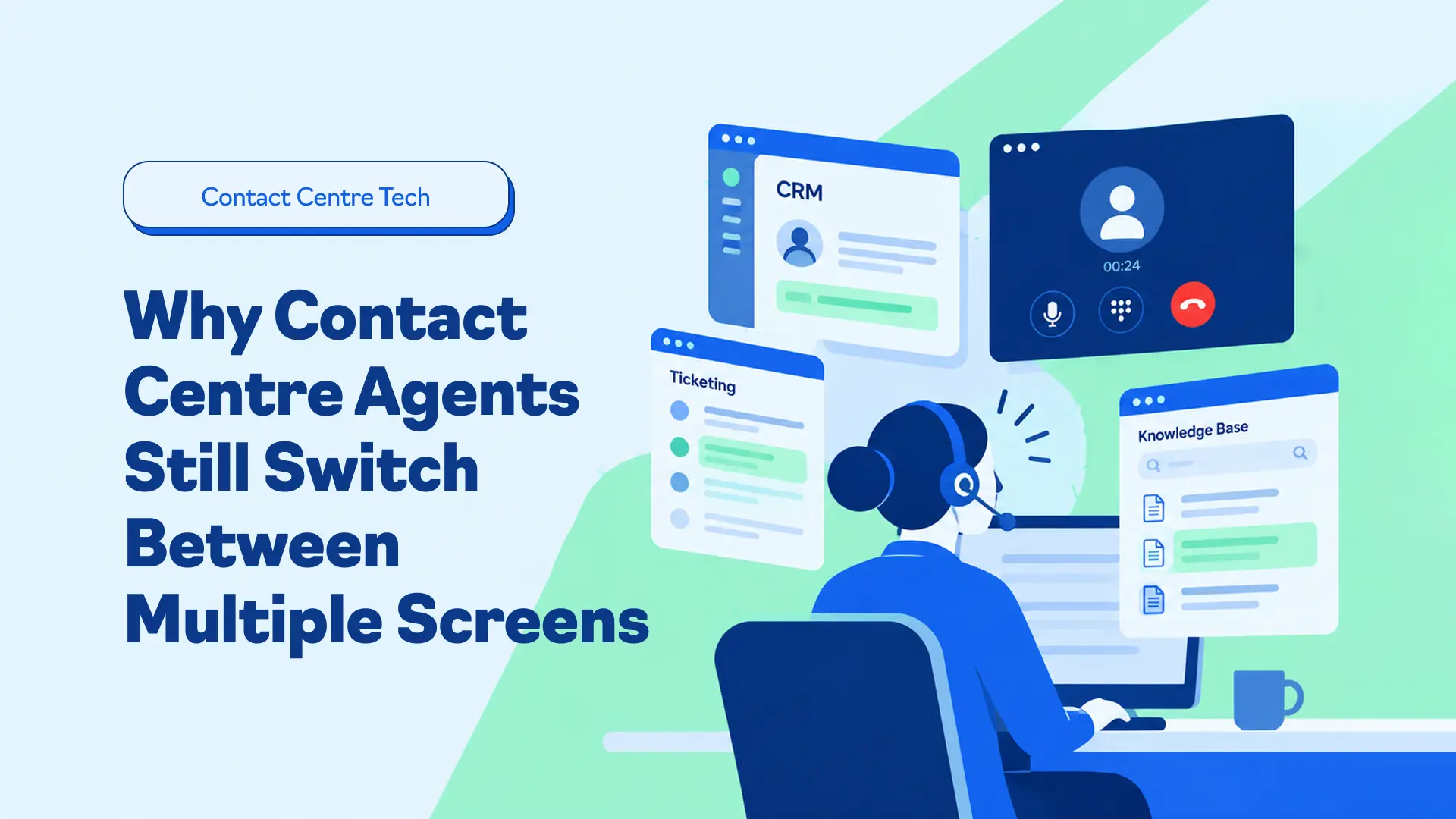
- Customer relationship management (CRM) integration. This gives agents the customer context they need at the moment they need it, without navigating between systems mid-conversation.
- Call recording and quality assurance. These tools provide the audit trail and performance data that regulated industries, in particular, can't operate without.
- Workforce management. For larger or more complex operations, contact centre workforce management capabilities covering forecasting, scheduling and real-time adherence are often as important as the interaction-handling features themselves.
How Does Reporting Help Improve Contact Centre Performance?
Reporting is where software investment either justifies itself or quietly disappoints. The metrics that matter go beyond call volume and average handling time. Together, these give a more complete picture of how the operation is performing:
- Service level
- Abandonment rate
- First contact resolution
- Customer satisfaction
- Cost per interaction
The distinction between efficiency metrics and service quality metrics is worth maintaining deliberately. A contact centre optimised purely for shorter calls can produce handling time improvements while simultaneously degrading the customer experience.
How Do You Measure Contact Centre Software ROI?
ROI assessment starts before implementation, not after. Establishing a baseline across the metrics that matter (current cost per interaction, resolution rates, agent productivity and manual workload) gives you something to measure against once the platform is live.
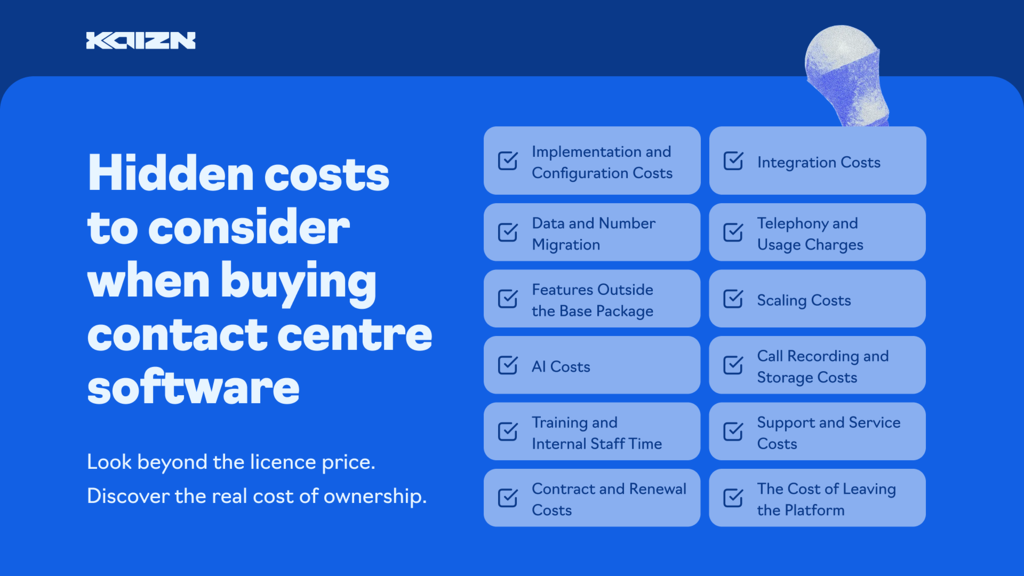
Total cost of ownership includes more than licensing fees. Implementation, integrations, training, ongoing support and the internal time required to manage the platform all belong in the calculation. Comparing that against measurable operational improvements, rather than projected savings, keeps the assessment grounded.
It's also worth distinguishing between time saved and cash saved. Automation that reduces manual work creates capacity. Whether that capacity translates into headcount reduction, volume growth or service improvement depends on decisions made after implementation, not by the software itself. For a more detailed look at where the financial levers sit, Kaizn's guide to how to reduce call centre costs covers the operational side of cost management in more depth.
What Should You Consider When Choosing a Platform?
Fit matters more than features. A platform with extensive capabilities that don't map to how the operation works creates complexity without benefit. The assessment should start with a clear picture of current workflows, integration requirements, team size and the reporting the business needs, then work outward to platforms that match.
Vendor stability, implementation track record and the quality of ongoing support deserve as much scrutiny as the feature list.
Find the Right Contact Centre Software with Kaizn
Kaizn works with Australian businesses to assess contact centre technology requirements, evaluate platforms without vendor bias, and support implementation and ongoing optimisation. If you're assessing options or questioning whether your current platform is doing what it should, it's worth getting an independent view before committing.
Frequently Asked Questions
What is contact centre management software?
Contact centre management software helps businesses organise customer interactions across phone and digital channels. It provides tools for routing enquiries, supporting agents and monitoring service performance.
What features should contact centre management software include?
Key features to assess include call routing, interactive voice response, omnichannel support, CRM integration, call recording, quality assurance and reporting. Workforce management and automation may also be useful depending on the team's size and operational requirements.
What is the difference between contact centre software and CCaaS?
CCaaS (Contact Centre as a Service) is contact centre software delivered from the cloud on a subscription, rather than installed and managed on-premise. Most modern contact centre management software is now delivered this way.
Which contact centre metrics should businesses track?
Useful metrics include service level, average waiting time, abandonment rate, first contact resolution, customer satisfaction and cost per interaction. Businesses should assess efficiency alongside service quality rather than treating shorter calls as the main measure of success.
How do you measure the ROI of contact centre software?
Compare measurable financial benefits with the total cost of ownership over a defined period, including licences, implementation, integrations, training and support. Establish a baseline before implementation and track changes in operating costs and productivity, distinguishing time saved from actual cash savings.
Do smaller contact centres need workforce management software?
Not always. Workforce management (forecasting, scheduling and real-time adherence) matters most in larger or more complex operations. Smaller teams can often manage with the scheduling and reporting in their main platform.
How can Kaizn help businesses choose contact centre software?
Kaizn reviews an organisation's customer experience and operational requirements, provides vendor-neutral technology advice, and supports implementation and ongoing optimisation. This helps businesses select a platform that fits their systems, teams and objectives.