Why Knowledge Management Is Critical for Modern Contact Centres
Knowledge management puts the answers agents need in one searchable, trusted place. Why it matters, what a good system includes and how to keep it current.

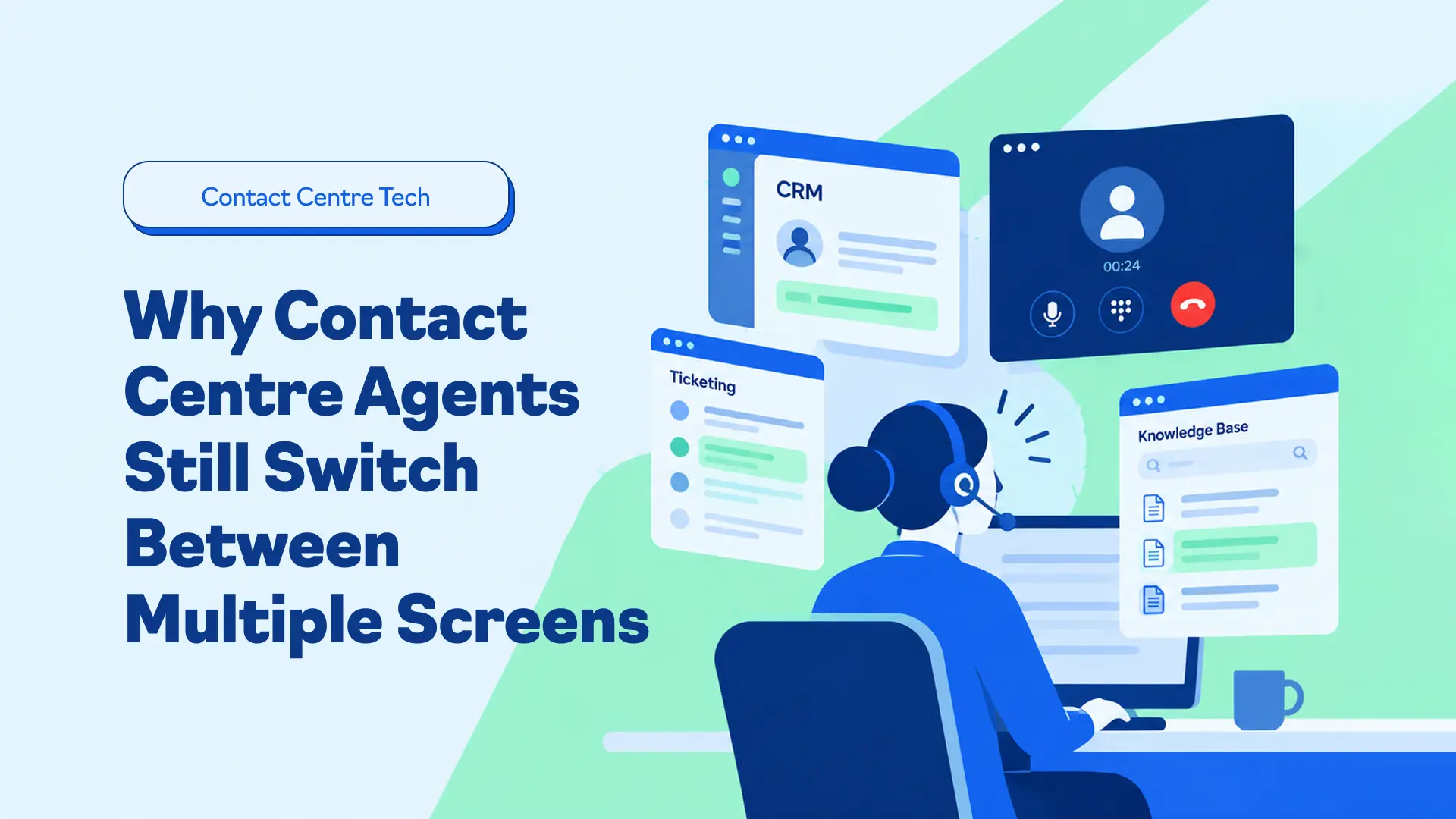
There's a version of this problem in almost every contact centre. An agent gets a question they haven't seen before. They put the customer on hold, search through a shared drive, check three different documents with different dates on them, ask the person sitting next to them, and come back with an answer they're not entirely confident in. It's slow. It's inconsistent. And it happens dozens of times a day.
The problem usually isn't that the information doesn't exist. It's that it's nowhere in particular, owned by no one specifically, and impossible to find quickly under the pressure of a live call.
TL;DR
- Contact centre knowledge management puts the information agents need into one structured, searchable place they can trust.
- Poor knowledge management hides behind other problems: long handling times, inconsistent answers, high transfers and slow onboarding.
- Done well, it makes agents faster, shortens onboarding and gives customers the same answer whoever they speak to.
- A good system is searchable in seconds, written for agents and built into the agent desktop.
- It only stays useful with named content owners, regular reviews and an easy way for agents to flag problems.
What Is Contact Centre Knowledge Management?
Contact centre knowledge management is the practice of organising the information agents need to handle customer enquiries into a structured, searchable and maintained system. Rather than answers living in email threads, shared folders, the memory of long-serving staff or a supervisor's head, they live in a single place that everyone can access and trust.
Done properly, it covers product and service information, policies, troubleshooting guides, escalation procedures and answers to the questions customers ask most. The system is only as useful as the processes behind it: who creates content, who approves it, who updates it and how agents flag when something is wrong or missing.
Why Does Scattered and Outdated Information Create Service Problems?
The operational consequences of poor knowledge management show up in ways that are easy to misattribute:
- Long handling times that look like an agent performance problem
- Inconsistent answers that look like a training problem
- High transfer rates that look like a routing problem
- Slow onboarding that looks like a recruitment problem
Often the underlying cause is the same: agents don't have reliable access to the right information at the right moment. When the knowledge base is a collection of documents last updated eighteen months ago, or a folder structure that only makes sense to the person who built it, agents fall back on asking colleagues, making their best judgement or putting customers on hold while they search.
Each of those workarounds costs time, introduces inconsistency and creates a customer experience that varies depending on which agent picks up the phone.
How Does Knowledge Management Support Agents and Customers?
- Speed. An agent who can find an accurate answer in fifteen seconds handles the interaction faster and more confidently than one spending two minutes searching across three sources. That difference compounds across hundreds of calls a day.
- Faster onboarding. For new staff, a well-maintained knowledge base compresses the onboarding curve significantly. Rather than shadowing experienced colleagues for weeks before feeling equipped to handle calls independently, agents can build competence faster when reliable guidance is consistently accessible. That matters both for productivity and for the confidence that affects how agents come across to customers.
- Consistency. When every agent is working from the same source of truth, customers get the same answer regardless of who they speak to or when they call. That reliability is a meaningful part of what customers experience as good service.
What Should a Contact Centre Knowledge Management System Include?
- Searchability. This is the core requirement. Agents on a live call need to find information in seconds, not minutes. A system that requires navigating category trees or remembering where something was filed doesn't serve that need.
- Content written for agents. Clear language and logical structure, written around the questions customers actually ask rather than the way the organisation thinks about its own products and policies.
- Integration with the agent desktop. A knowledge base that sits outside the agent desktop, requiring a separate login or browser tab, creates friction that reduces how often it gets used. Contact centre software that surfaces relevant knowledge articles within the agent interface removes that friction entirely.
- Escalation paths, related articles and flagging. These round out a system that agents trust and use rather than work around.
How Do You Keep Your Knowledge Base Accurate and Useful?
A knowledge base that isn't maintained becomes a liability faster than most organisations expect. Outdated articles that contradict current policy, products that no longer exist, procedures that changed six months ago: agents who encounter these stop trusting the system and go back to asking colleagues instead.
Keeping a knowledge base useful requires clear content ownership, scheduled review cycles and a straightforward way for agents to flag problems. Someone needs to be responsible for each area of content, with the authority and time to keep it current. Without that accountability, accuracy degrades gradually and quietly until the system is effectively unused.
Improve Contact Centre Knowledge Management with Kaizn
Kaizn helps organisations assess how information is currently accessed and used across their contact centre, identify where gaps are creating operational problems, and choose a contact centre knowledge management approach suited to their team, technology and workflows.
If agents in your operation are spending more time finding answers than giving them, it's worth looking at what a better setup could change.
Frequently Asked Questions
What is contact centre knowledge management?
Contact centre knowledge management is the process of creating, organising, maintaining and sharing the information agents need to answer customer enquiries. It combines a searchable knowledge base with processes that keep information accurate and useful.
Why is knowledge management important in a contact centre?
Agents need reliable information to resolve enquiries efficiently and consistently. Effective knowledge management can reduce time spent searching for answers, support new staff and limit unnecessary transfers or requests for supervisor assistance.
What should a contact centre knowledge base contain?
A knowledge base should include relevant product and service information, policies, troubleshooting instructions, common questions and escalation procedures. Content should use clear language and be organised around the enquiries agents handle.
How do you keep a contact centre knowledge base up to date?
Assign owners to content, establish review dates and update articles when products, policies or processes change. Give agents a simple way to flag missing or incorrect information, and archive outdated material to avoid conflicting answers.
Who should own the knowledge base in a contact centre?
Each area of content needs a named owner with the authority and time to keep it current. Without that accountability, accuracy slips quietly until agents stop using the system.
Can AI replace a contact centre knowledge base?
Not on its own. AI tools such as chatbots and agent assist draw on your knowledge base, so if the content is out of date, the AI gives out-of-date answers too. Getting the knowledge base right is usually a step before AI, not a substitute for it.
How can Kaizn help improve contact centre knowledge management?
Kaizn helps organisations assess how information is accessed and used, identify gaps, and select a suitable knowledge management approach. This includes considering how systems support agents' workflows and connect with existing contact centre technology.